CCMI Gets Lionfish Fighting Tools
09/06/2009
The recent appearance of the beautiful, but dangerous Indo-Pacific Red Lionfish in our waters has united Cayman's divers and marine conservationists in their efforts to preserve our treasured marine environment. A recent example of this union was a generous donation of specialized equipment to the Central Caribbean Marine Institute (CCMI) by the not-for-profit dive club, The Cayman Islands Divers - BSAC # 360."Thanks to the generous contribution of this specialized equipment from Cayman Islands Divers, CCMI is properly equipped to do our part in helping to control the population of lionfish here in the waters of the Cayman Islands." Commented Claire Dell from CCMI's Little Cayman Research Centre
09/06/2009
The recent appearance of the beautiful, but dangerous Indo-Pacific Red Lionfish in our waters has united Cayman's divers and marine conservationists in their efforts to preserve our treasured marine environment. A recent example of this union was a generous donation of specialized equipment to the Central Caribbean Marine Institute (CCMI) by the not-for-profit dive club, The Cayman Islands Divers - BSAC # 360."Thanks to the generous contribution of this specialized equipment from Cayman Islands Divers, CCMI is properly equipped to do our part in helping to control the population of lionfish here in the waters of the Cayman Islands." Commented Claire Dell from CCMI's Little Cayman Research Centre
The lionfish is a voracious predator capable of removing large numbers of native marine species from local waters with few, if any, natural predators in their newly invaded range. Combined with their ability to reproduce more often and at an earlier age than most other reef fish they have the potential to become the most abundant predator on the reef and rapidly devastate populations of local reef species if management and control measures are not implemented. Such a rapid and severe change to the balance of the ecosystem could have permanent affects on the structure and composition of the local marine ecosystem. With this in mind, the Department of Environment has taken the stand that all lionfish must be removed from our waters. "Red Lionfish should only be caught by those trained and licensed to do the job, they have venomous spines and can be harmful to humans. Specialized equipment is needed to safely capture the species" stated Bradley Johnson of the DoE. Members of the Cayman Islands Divers are very committed to preserving the marine environment, and promoting sustainability of the coral reef ecosystem. Several have recently attended the lionfish licensing sessions provided by the Department of the Environment.
"Many of us are actively involved in spotting and capturing this invasive species." newly elected Chairman, Sharon Whitmore confirmed. "We are pleased to be able to donate not just our time, but this much-needed equipment to the CCMI to help with their efforts in Little Cayman."Cayman Island Divers- Bsac-#360 is a not-for-profit club based in Grand Cayman whose members are divers of all ages and walks of life. All share a passion for diving and love to take part in a variety of social activities.
With a custom built 26ft dive boat, they are able to dive most sites around the island without the constraints of many commercial dive boats. It remains one of the most affordable, flexible and enjoyable ways of diving in the Cayman Islands. For more information about the club, contact Sharon Whitmore on 926 1966 or swhitmore@jghs.edu.ky or visit the website for further details http://www.bsac.ky/
The Central Caribbean Marine Institute was incorporated in 1998 as a non-profit 501 (c)3 organization. CCMI was established as an international charitable organization after becoming incorporated in the Cayman Islands (2002) and in the UK in 2004.Since its first years, CCMI has proven a valuable asset to the effort to understanding changing coral reef and tropical marine environments, and its research and education programs have established a solid foundation for future reef education and awareness in the Caribbean and for students and researchers from around the world.
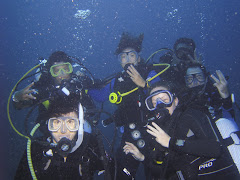
For more information on the Central Caribbean Marine Institute, please see www.reefresearch.orgFor more information on the lionfish please visit the DoE's website at http://www.doe.ky/. To report a lionfish sighting please call the DoE on 949-8469, after hours contact information is also available at this number.PHOTO CAslands Divers working together against invasive species.L-R: Photo Caption: L-R, Bradley Johnson (DoE), Sharon Whitmore (BSAC), Claire Dell (CCMI), Jenny Tordoff (BSAC)
' name=5599_RCYRENEWS_DETAILS_92054641._reportbody_text> " name=5599_RCYRENEWS_DETAILS_92054641._reportfooter_text>
News Categories
Business
Education
Entertainment/Sport
General
Health
Living/Travel
Police/Court
Politics
Sci/Technology
Tourism
' name=5600_RCYRENEWS_CATEGORIES_92054641._reportbody_text> " name=5600_RCYRENEWS_CATEGORIES_92054641._reportfooter_text>
Search
Search News
' name=5599_RCYRENEWS_DETAILS_92054641._reportbody_text> " name=5599_RCYRENEWS_DETAILS_92054641._reportfooter_text>
News Categories
Business
Education
Entertainment/Sport
General
Health
Living/Travel
Police/Court
Politics
Sci/Technology
Tourism
' name=5600_RCYRENEWS_CATEGORIES_92054641._reportbody_text> " name=5600_RCYRENEWS_CATEGORIES_92054641._reportfooter_text>
Search
Search News